Edvard Munch in Thüringen: Landscape, Light and Artistic Renewal
In the winter of 1905–06, Edvard Munch stayed in the small town of Elgersburg in Thüringen, Germany. Over the course of a few months he created a number of landscape paintings that today represent an exciting period in his oeuvre. The stay resulted in at least fourteen known paintings connected with the place, among them a series of five closely related landscapes showing the same motif in different variations.
When these pictures were shown to the public, they were regarded as innovative and significant. Nevertheless, they have since been given a relatively modest place in the narratives of Munch's art. While works from places such as Åsgårdstrand and Kragerø are often highlighted as central to his development, the Elgersburg landscapes have largely remained in the shadows. One reason may be that the inspiration Munch found in Elgersburg does not fit the established art-historical narrative of him as an artist closely bound to Norwegian nature and landscape. Munch's stay in Thüringen was relatively brief, and the motifs came into being outside the national context that has often shaped the interpretation of his work. Art history has therefore treated these pictures as aberrant or transitional works, rather than as a central part of Munch's development.
Landscape Conveyed as Experience
The Elgersburg landscape series nevertheless reveals an artist actively experimenting with new modes of expression. Rather than painting a definitive version of a motif, Munch worked with repetition. He painted the same landscape several times, altering light, colour, composition and format from picture to picture. For Munch these were not copies, but a way of investigating how a motif could be transformed through different artistic choices. This working method links Munch to a broader international artistic development around the turn of the century. Artists such as Claude Monet, Vincent van Gogh and Paul Cézanne explored similar ideas through series and repetition, in which variations in light, colour and mood became more important than the exact rendering of nature. We should not forget that Munch was part of this international artistic milieu and was probably inspired by the experimental art of his day, even though he seldom acknowledged it.
Landscape had long been an important part of Munch's art. As early as the 1890s he developed a pictorial language marked by atmospheric light, simplified forms and a distinctly subjective approach to nature. These landscapes often express feelings, memories and existential experiences, as much as they depict specific places. At the same time, the Elgersburg series shows that the landscapes can also be understood in another way. Here it is not only a matter of mood and symbolism, but also of formal investigations of colour, light and painterly means. The series bears witness to an artist in search of new solutions and exploring new directions in his work. These pictures are therefore important transitional works between earlier and later periods of his oeuvre.
The pictures from Elgersburg mark a turning point in Munch's artistic development. Here the colours become stronger, the light more prominent and the brushwork more systematic. The landscape is presented not merely as a place, but as an experience. Nature acquires a distinctive radiance and presence that point forward to the light-filled landscapes and cultural landscapes Munch would paint in the years after 1909.
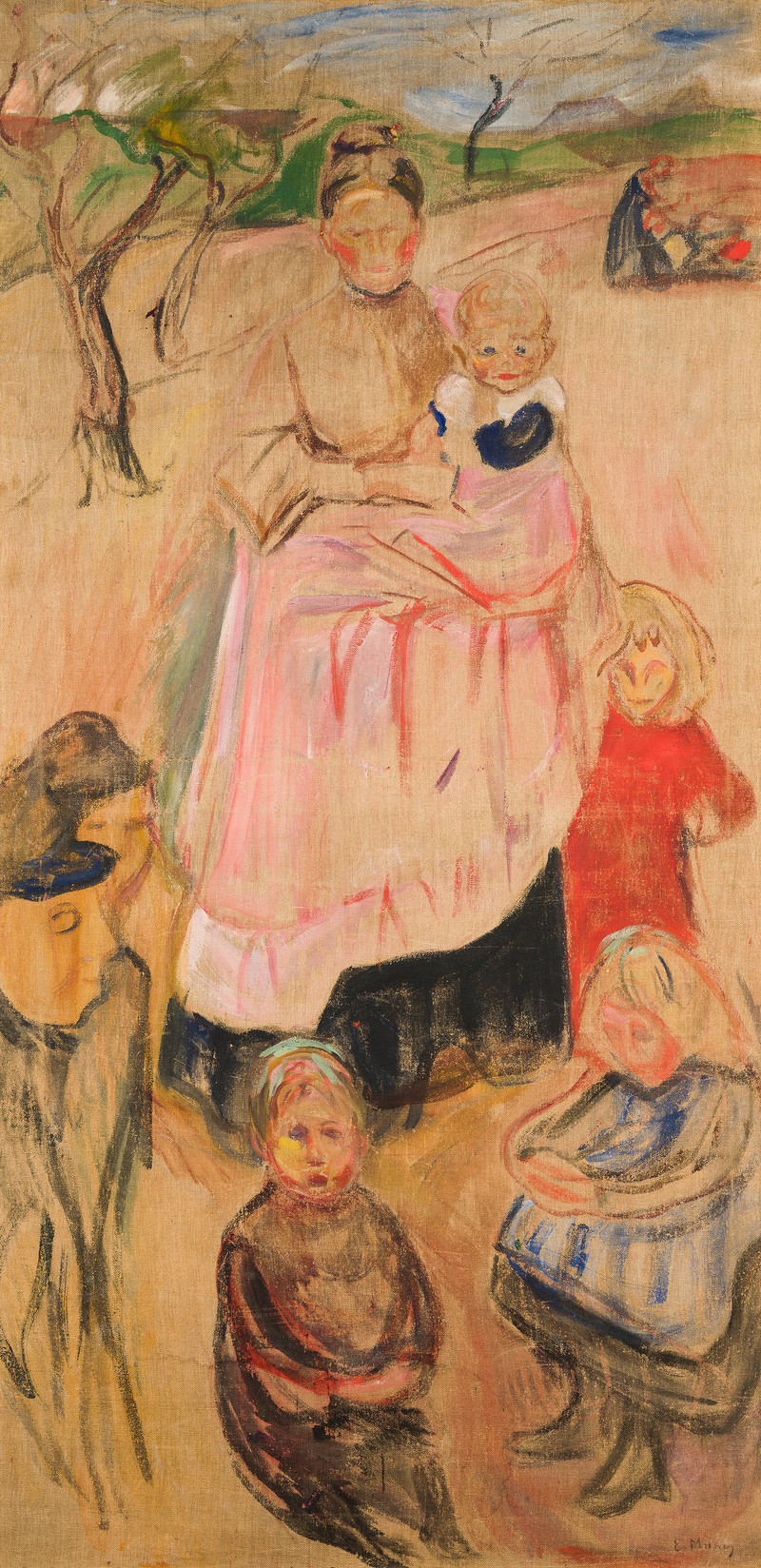
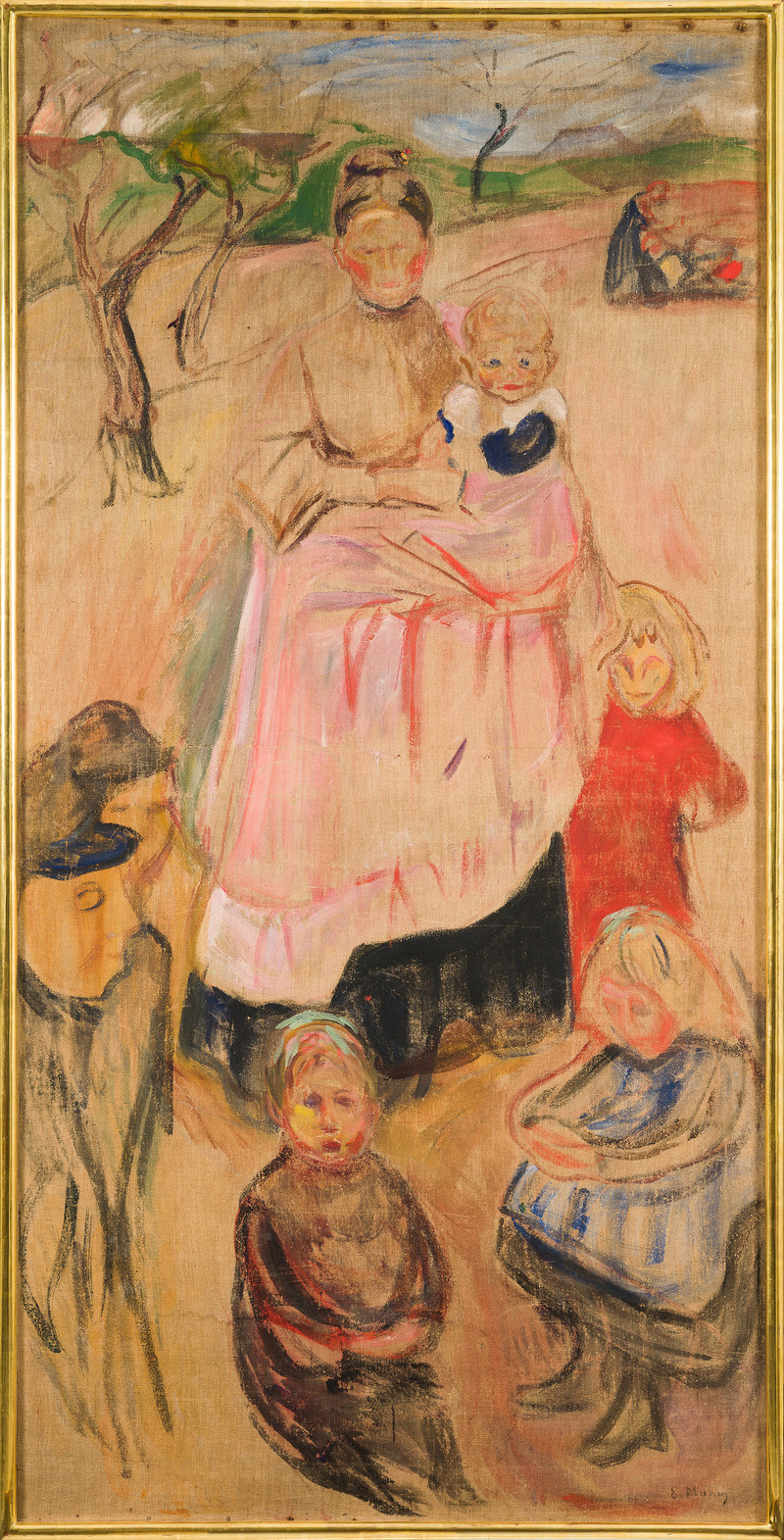
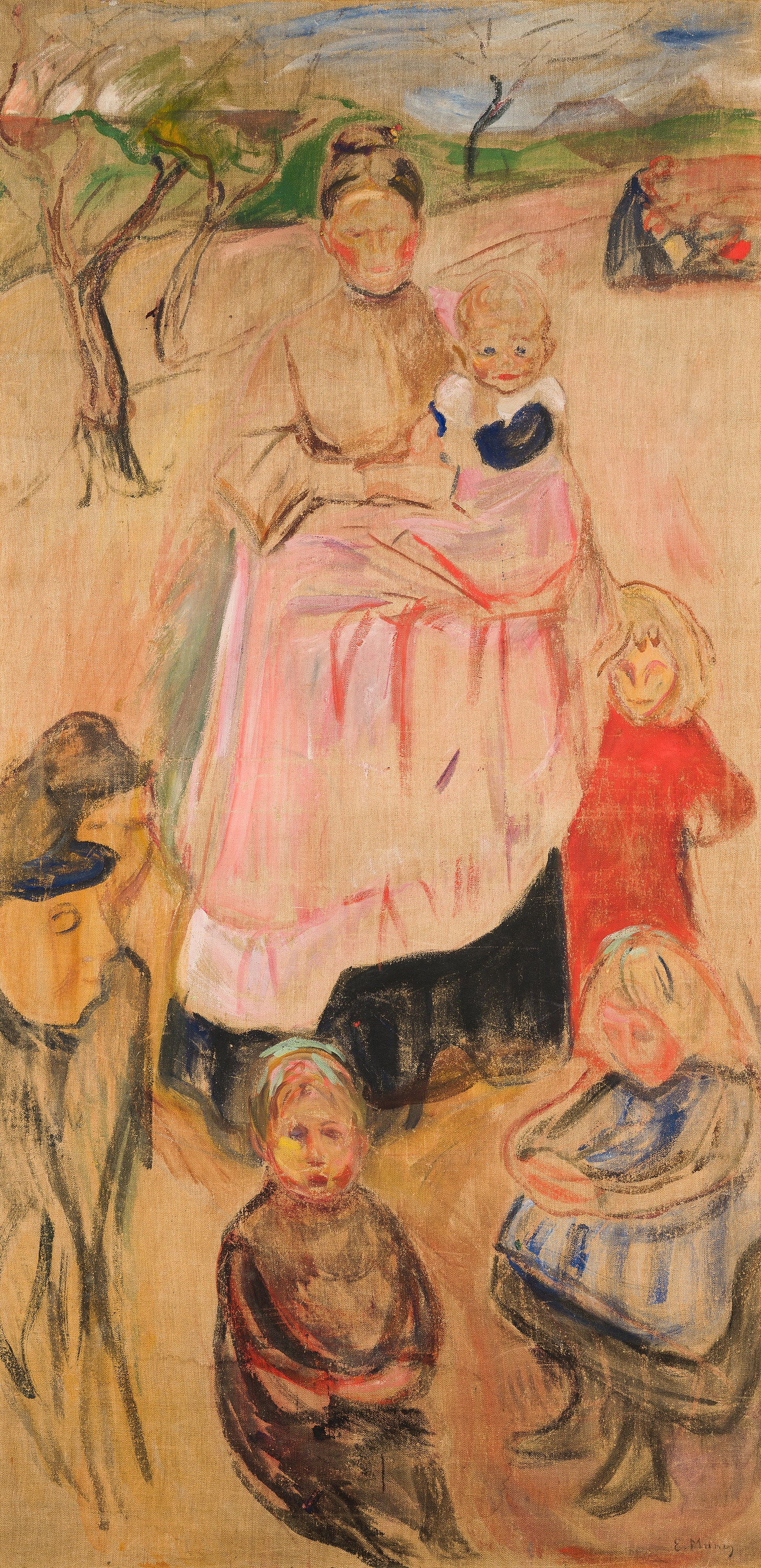
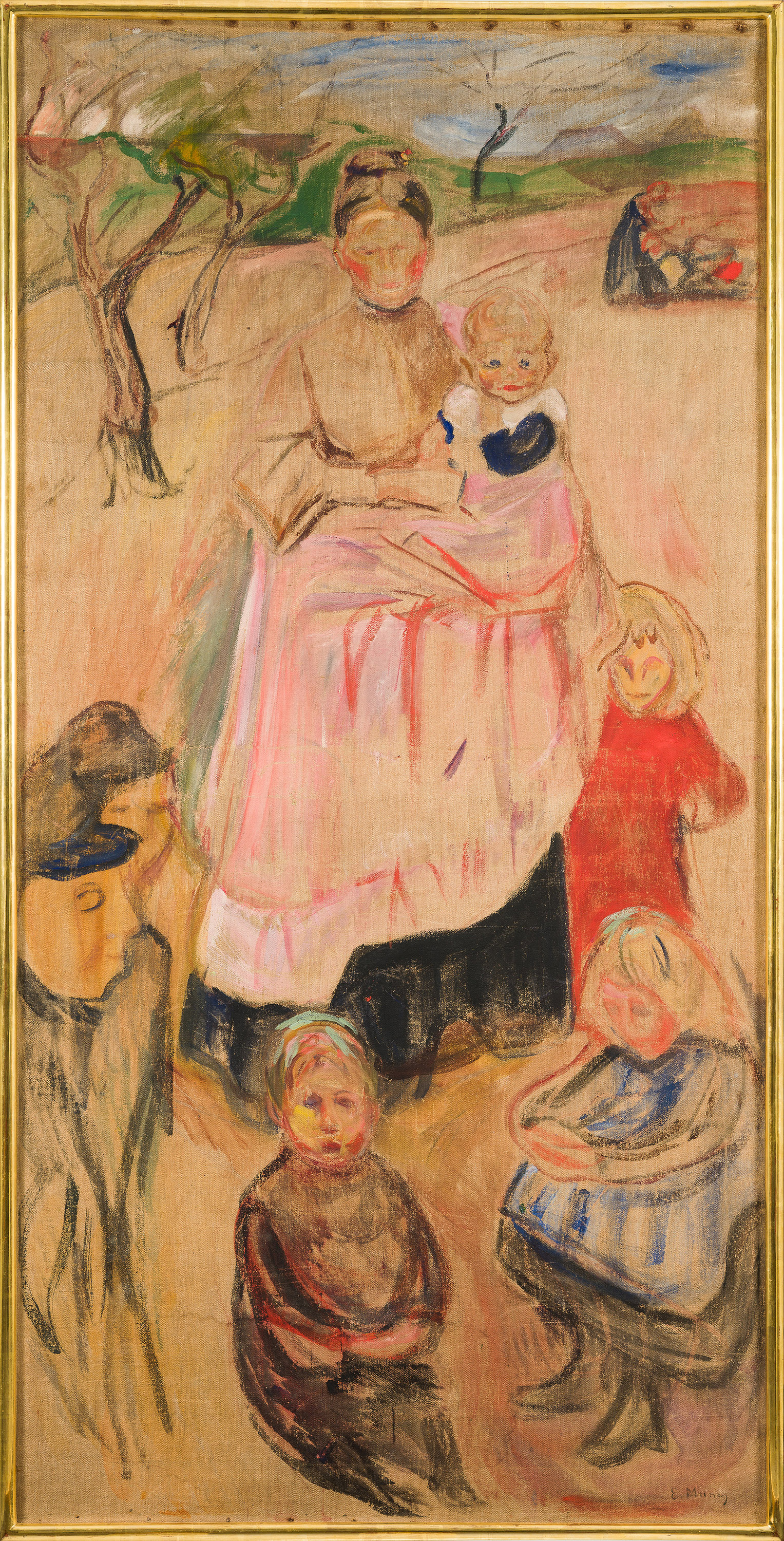
Mother with Children, Thüringen 1906
Munch produced several motifs of mothers with children in Thüringen during his stay in 1906. The works form part of a larger series in which landscapes and people in nature make up the range of motifs. The Munch Museum's collection holds several versions of this group of motifs in other media. This shows that Munch worked as exploratively with this type of motif as with his landscape motifs from the area in the same year. The pictures show groups of women and children in an expressive landscape of trees and other natural elements. The style is typical of Munch's pictures from the remainder of his stay in Thüringen. Vigorous brushwork, dissolved forms and a particularly vivid use of colour are characteristic of these paintings and of the coming period in Munch's career. In many ways, a reinterpretation of the concept of vitalism can be read into this group of motifs, with the women and children as symbols of the cycle and power of nature.
Text by Luisa Aubert