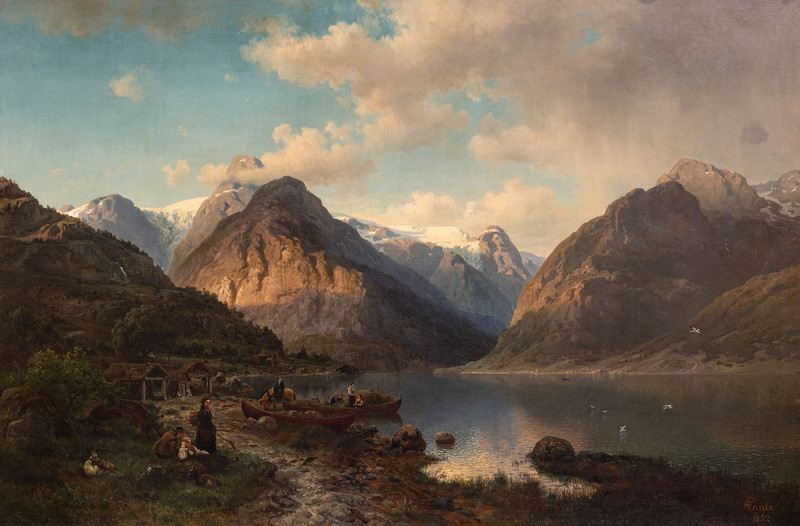
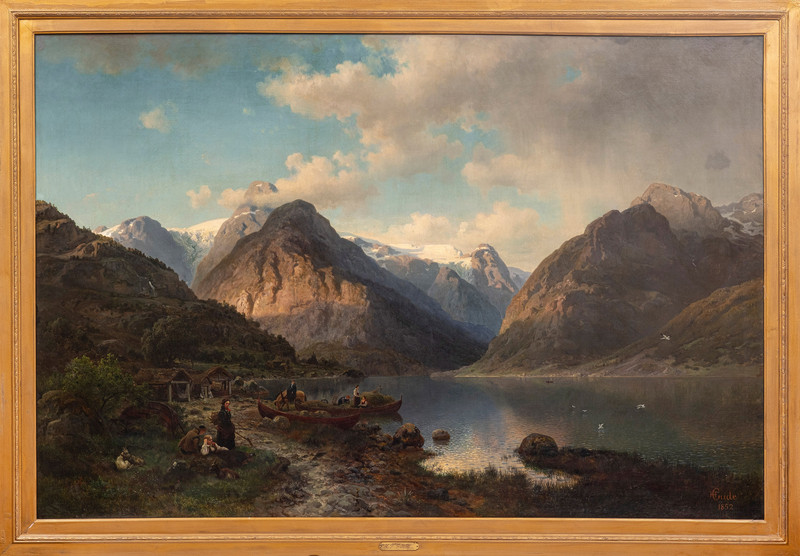
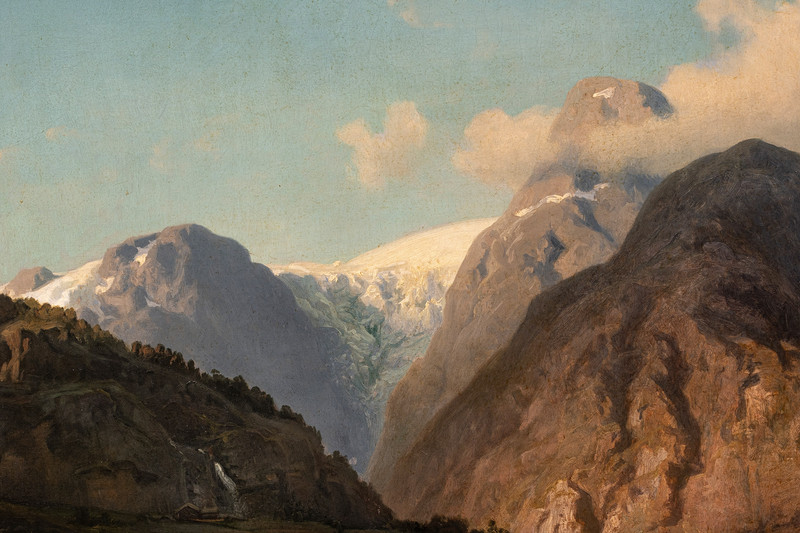
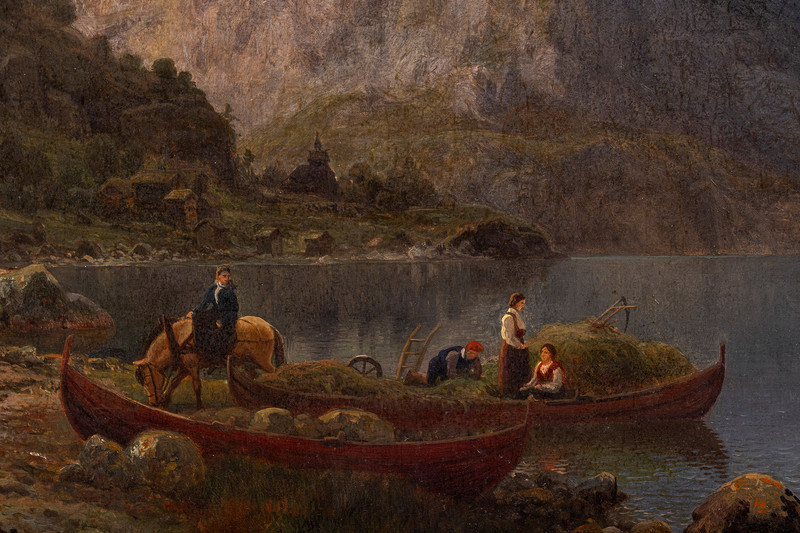
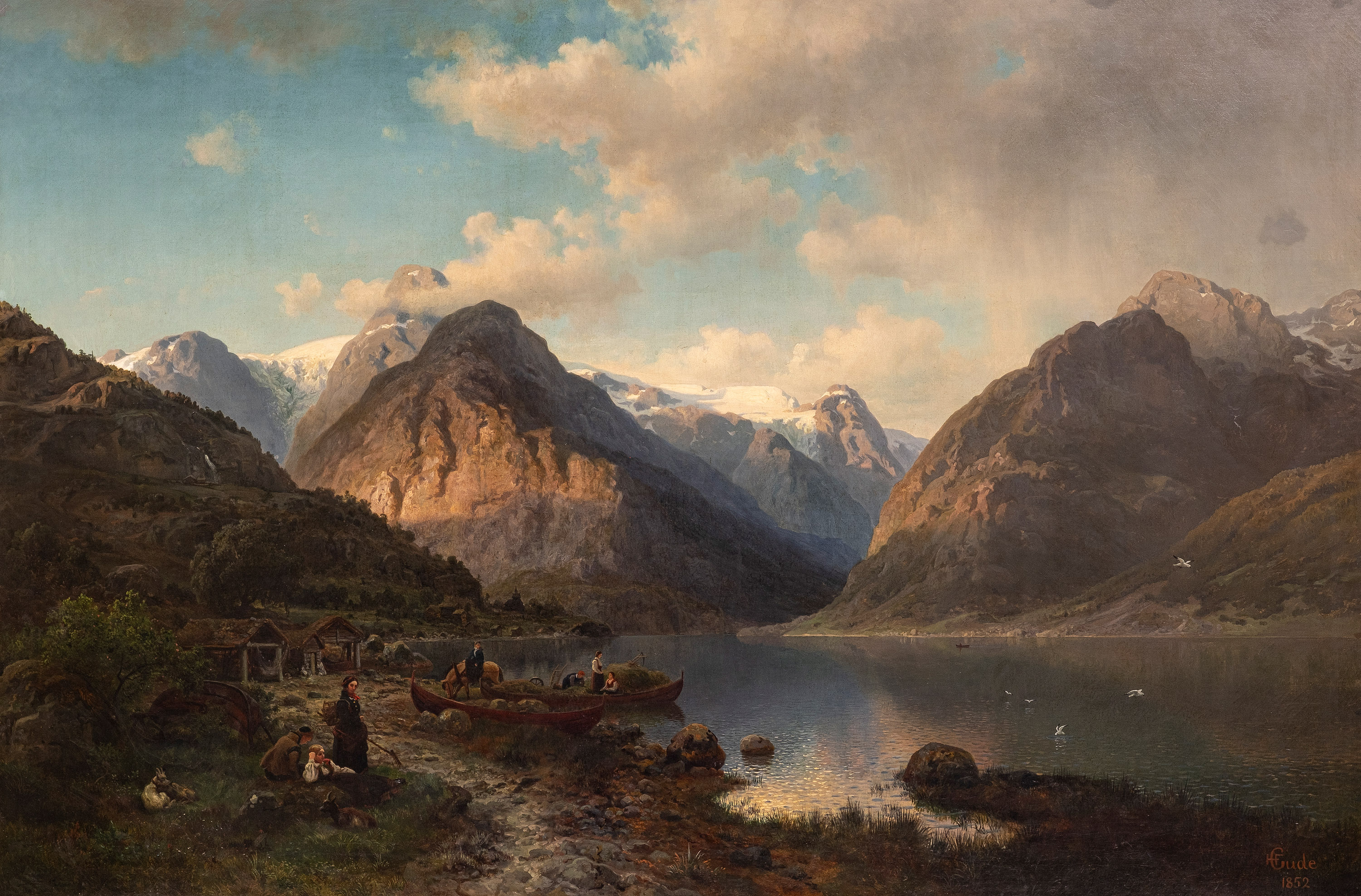
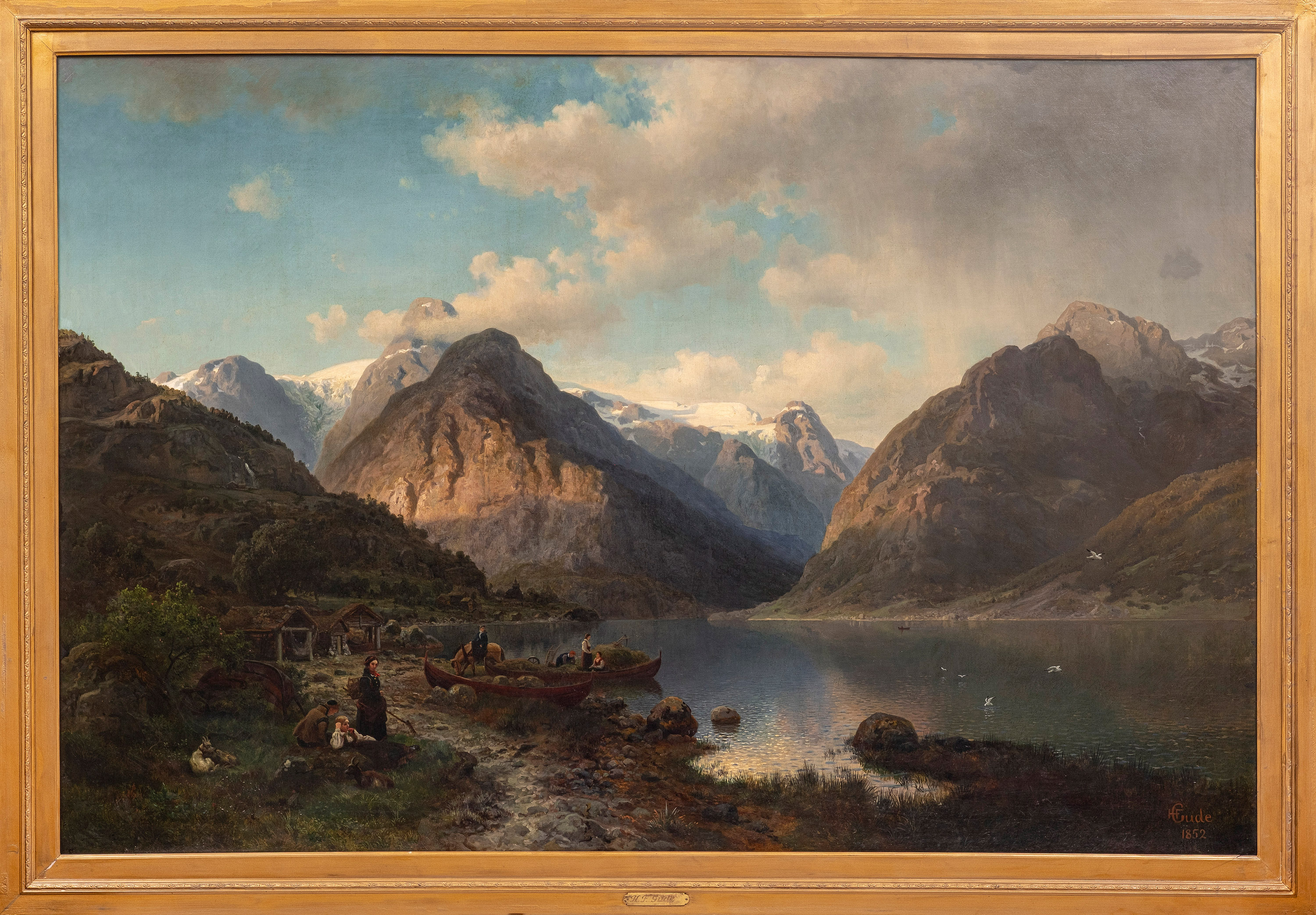
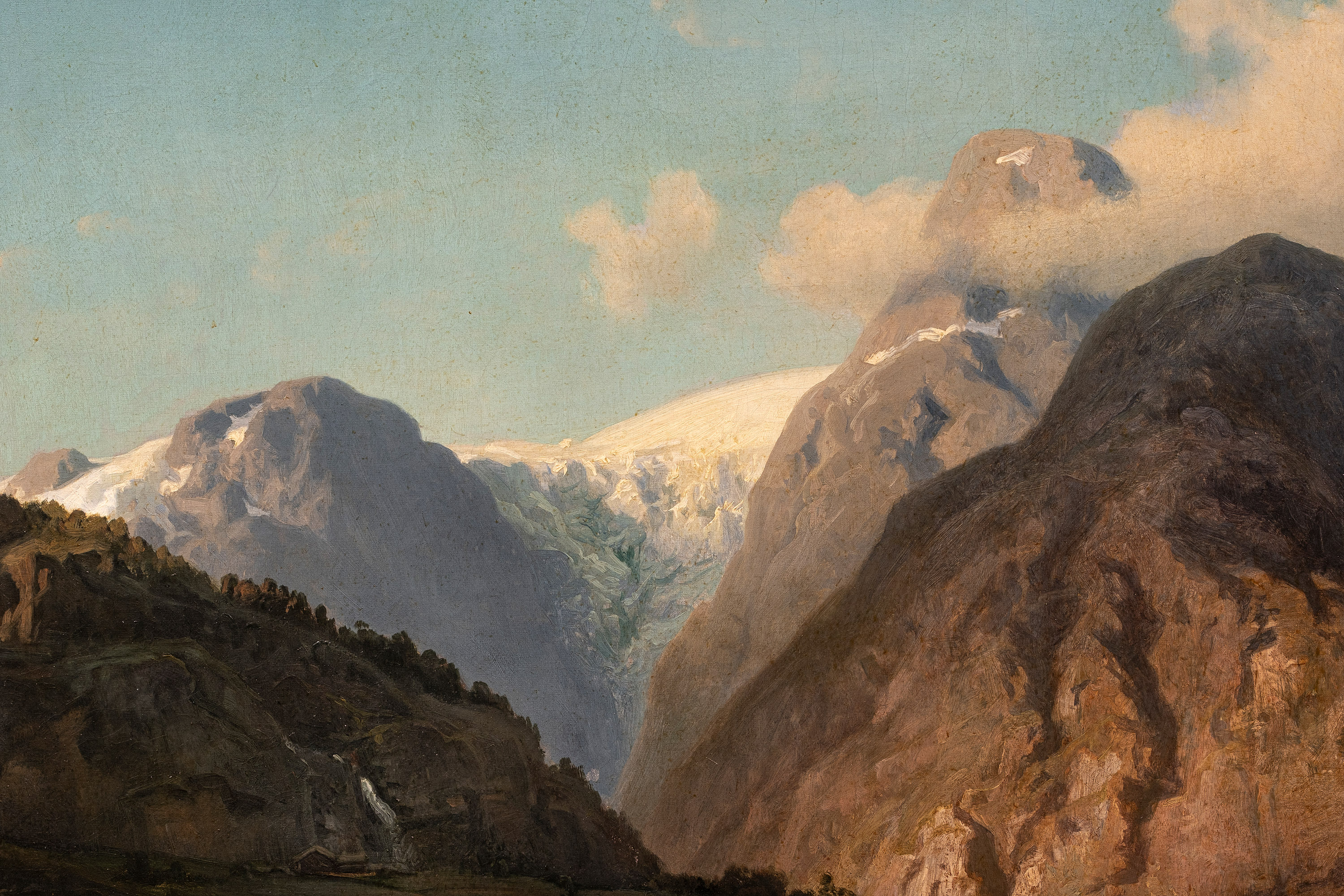
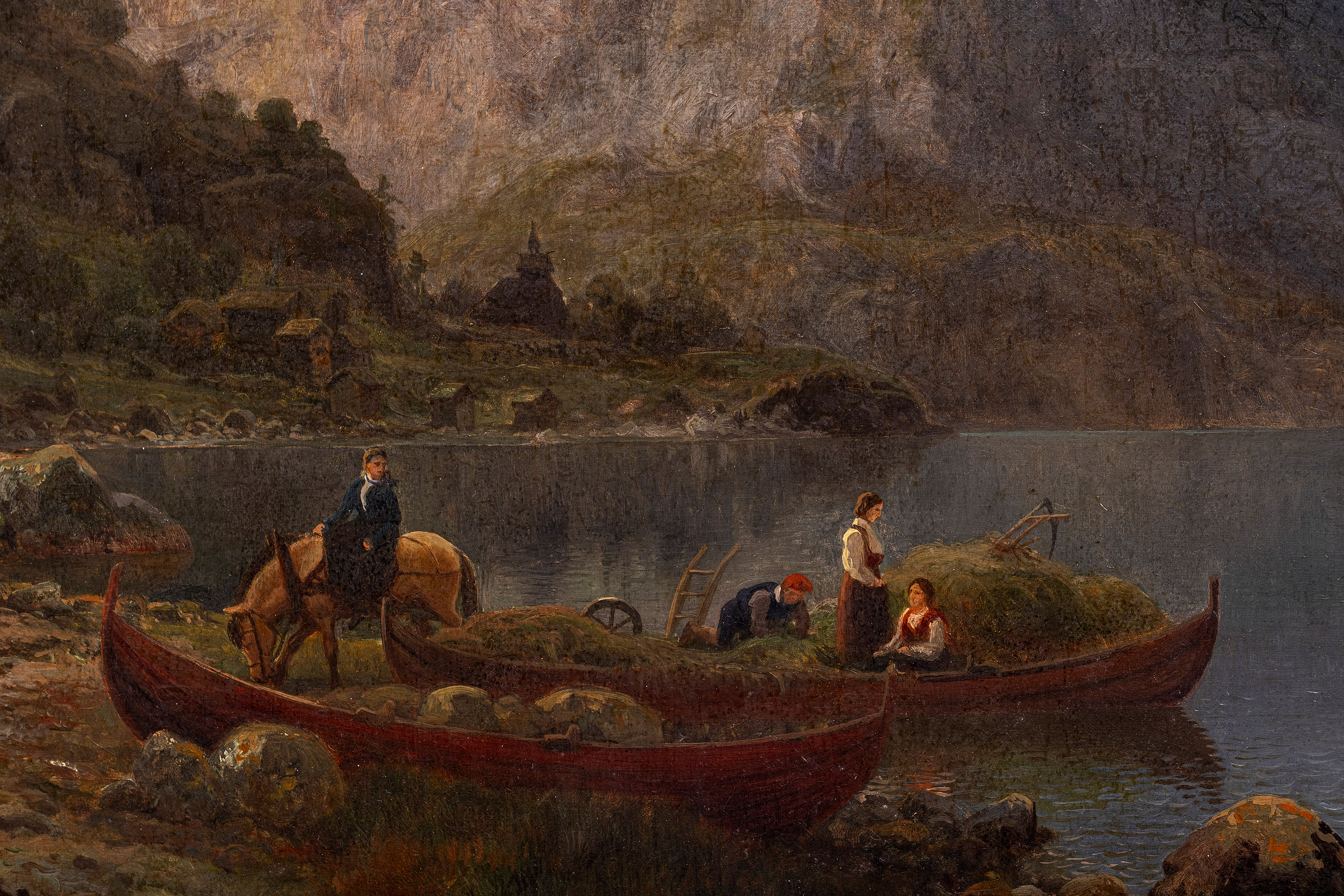
Suphellebreen, Fjærlandsfjorden 1852
Mountain Landscapes
The Norwegian high mountains became Hans Gude’s principal subject during the early years of his artistic career, helping to establish his reputation far beyond Norway’s borders. Particularly in Germany, his monumental mountain landscapes attracted considerable attention for their combination of meticulous natural observation and Romantic atmosphere. In these works, nature appears both magnificent and untamed: dark banks of cloud drift across the landscape, shadows fall over the mountainsides, while sudden shafts of sunlight break through, illuminating sections of the terrain.
This characteristic approach to landscape painting is clearly evident in Mountain Landscape with an Approaching Storm (1848), a work based on studies made directly from nature and subsequently developed into a larger studio painting in Düsseldorf. This working method was typical of the landscape painters of the Düsseldorf School, who combined direct observation with carefully considered composition. The painting was exhibited at the academic art exhibitions in Berlin and Dresden, where it received highly favourable reviews.
Gude’s early breakthrough on the European art scene was closely linked to the growing interest in Norwegian landscapes among European audiences. The dramatic mountains, glaciers and fjords offered subjects characterised by a distinctive and seemingly untouched natural world, giving Gude a clearly recognisable artistic identity. At the same time, he maintained strong ties with Norway through regular exhibitions in Christiania, where the Christiania Art Society became one of his most important supporters and collectors. Today, Gude can rightly be regarded as the most celebrated and renowned Norwegian painter of his generation, represented in private, princely and public collections across several countries.
An Ecocritical Perspective on Art History
The landscape painters of the Düsseldorf School approached the study of nature in a systematic manner. The summer months were devoted to travelling and making sketches directly in the landscape, while the finished paintings were composed in the studio during the winter. Gude’s monumental depictions of Norwegian nature, including Suphellebreen, Fjærlandsfjorden 1852, are rooted in this working method. The painting brings together direct observations of nature and artistic interpretation, emphasising the grandeur, drama and poetic qualities of the landscape.
A preparatory study for the painting, in the form of a pencil drawing dating from the summer of 1845, is held in the collection of the National Museum in Oslo. The drawing was last exhibited at the National Gallery in 2008, as part of the exhibition The Discovery of the Mountain. Today, glacier imagery has attracted renewed attention among art historians and researchers, as such works serve as visual documentation of environmental changes resulting from global warming. Many of the glaciers depicted in these paintings have receded dramatically over the past 150 years, while others have disappeared altogether.