From Åsgårdstrand
An article published in the periodical Urd in 1900, offers an insight into Hans Heyerdahl’s relationship with the coastal town of Åsgårdstrand in Vestfold. In his travelogue, the artist describes the town’s cherry trees, its little white houses and gardens, and its lively community with an almost poetic enthusiasm. At the same time, he conveys a sense of nostalgia and concern about the changes taking place around the turn of the century. The traditional fishing community was gradually disappearing, as artists, the bourgeoisie and affluent summer visitors increasingly made their mark on the town. New hotels, villas, roads and harbour facilities were transforming both the built environment and the surrounding landscape. In his text, Heyerdahl employs an allegory in which the town is personified as a young woman: initially an innocent young maiden, she gradually becomes more self-aware and adapts to modern life.
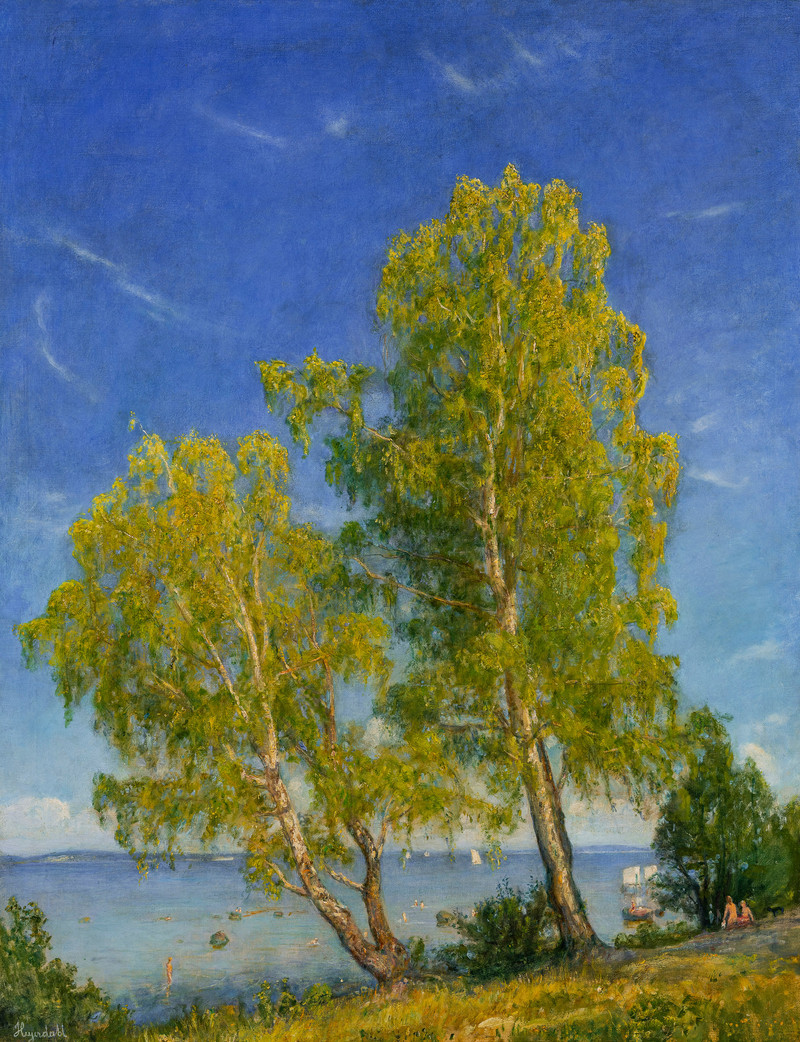
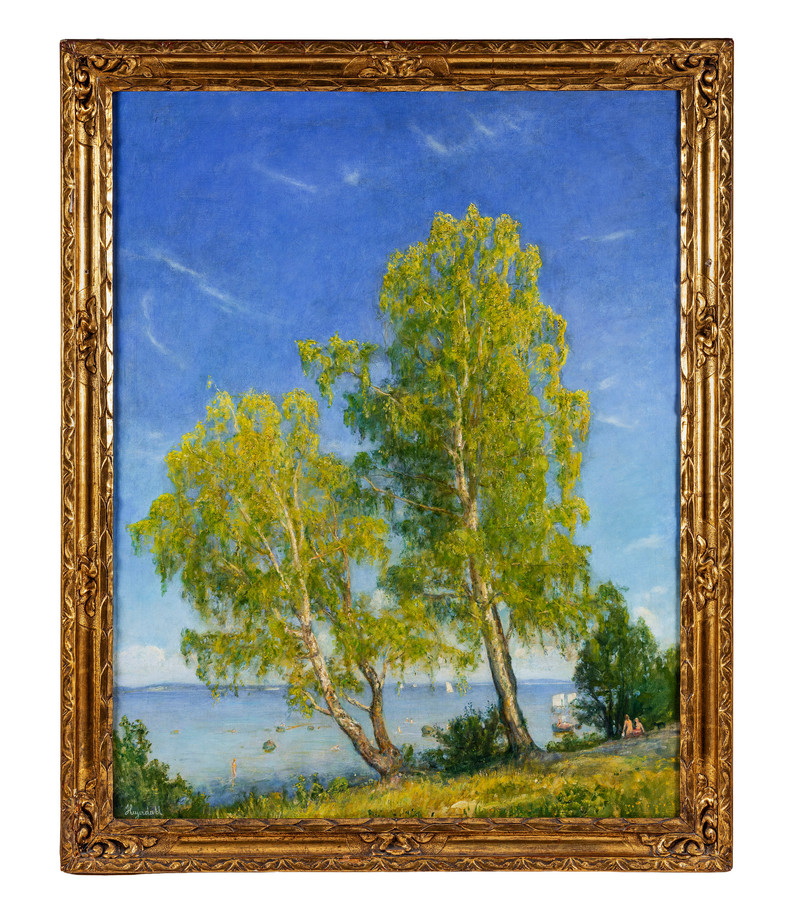
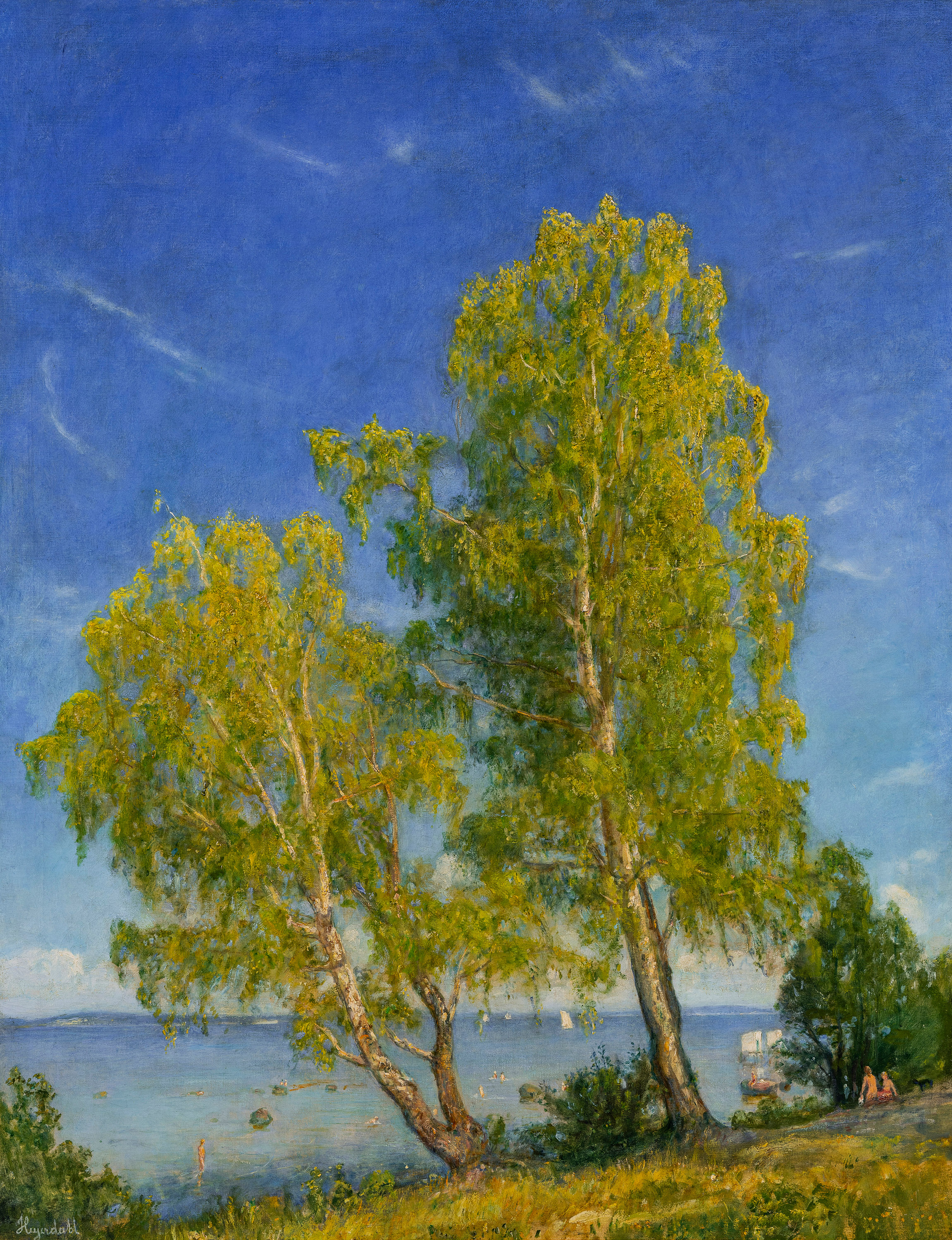
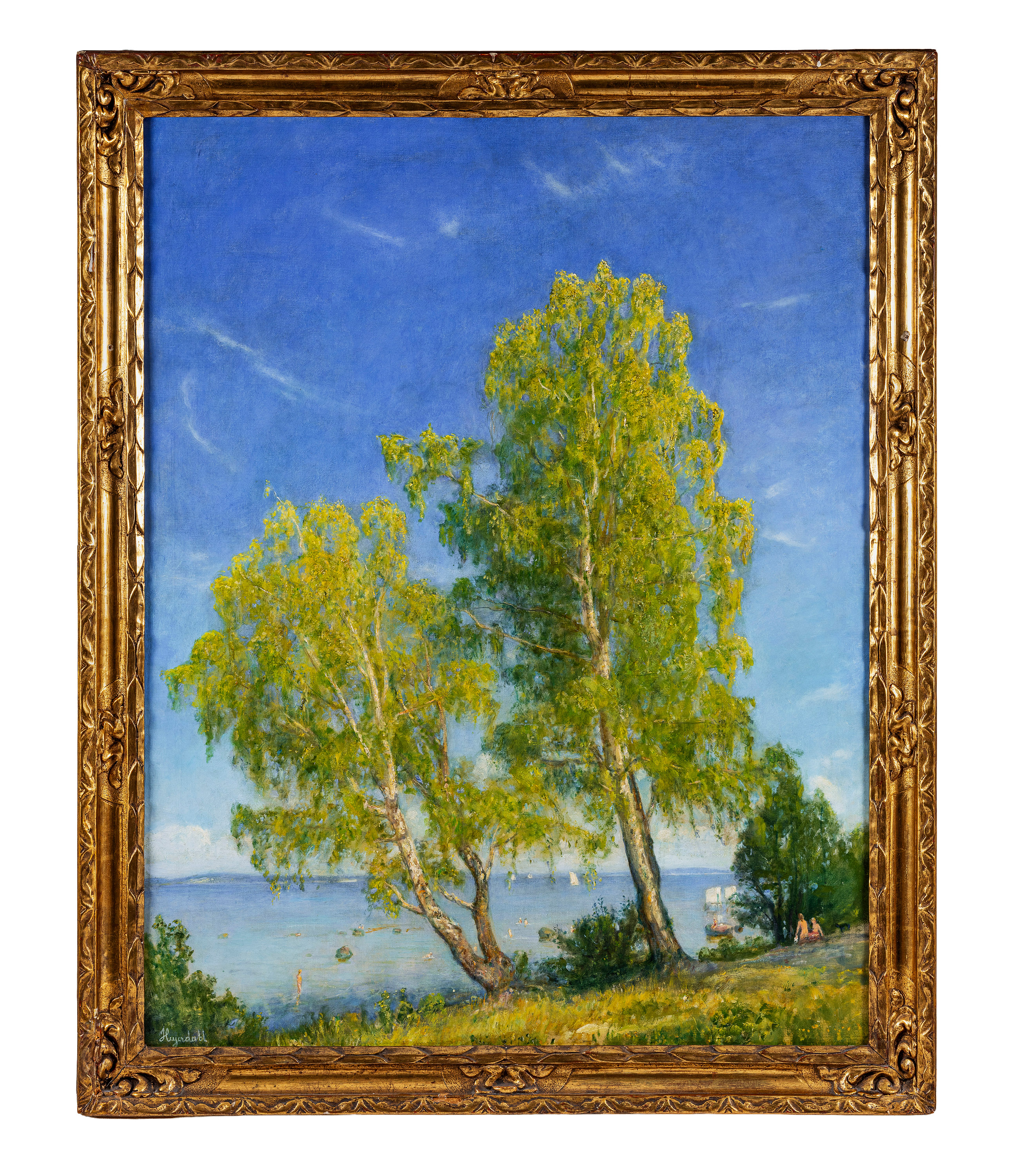
Nevertheless, From Åsgårdstrand emerges as a celebration of modern life. At first glance, the two monumental birch trees dominate the composition. They stand prominently at its centre, their fresh green foliage set against a clear summer sky. The imagery evokes the Norwegian landscape tradition, in which nature is imbued with atmosphere and an idyllic quality. The imposing birch trees suggest the town’s long-standing appeal, suggesting its historical significance as a natural harbour blessed with a mild climate. On closer inspection, however, figures of summer visitors come into view, basking in the sun and enjoying the carefree pleasures of the natural surroundings. On the water, small pleasure boats with white sails can be seen. The scene conveys the defining pursuits of modern leisure: recreation, prosperity and enjoyment.
Viewed in the context of Heyerdahl’s travelogue, From Åsgårdstrand may be interpreted as a reflection on the emergence of something new through the encounter between modernity and the past. Few images capture the transition from the nineteenth to the twentieth century more precisely. Together, Heyerdahl’s writings and paintings offer us a unique insight into how this transition found expression in a tension between opposing ideas.