From Hogstvet in Ås (1914)
Between 1912 and 1916, Sohlberg made several extended stays in Ås, where he explored a new understanding of landscape as a subject. In discussing a painting from 1918, the artist remarked: “The many years I have now spent living among farmers have led me to see other aspects of nature, beyond the purely decorative – namely, the structure of the landscape itself.” This statement reveals Sohlberg’s appreciation of the cultivated landscape, shaped by human intervention. Nevertheless, his landscapes were never merely naturalistic observations, as they were invariably coloured by his personal experience of the world around him. This has contributed to the characterisation of Sohlberg, by the art historian Marit Lange, as an artist working at the intersection of realism and Romanticism.
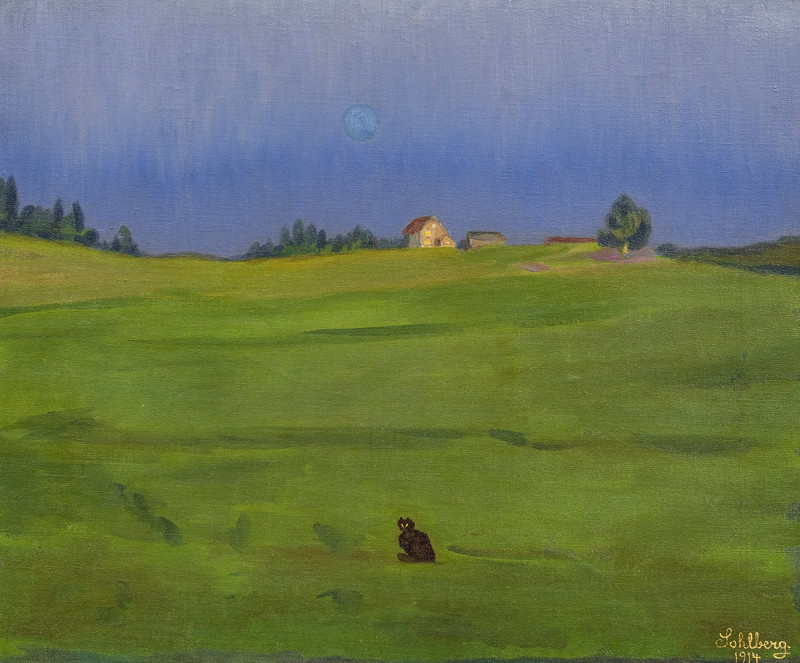
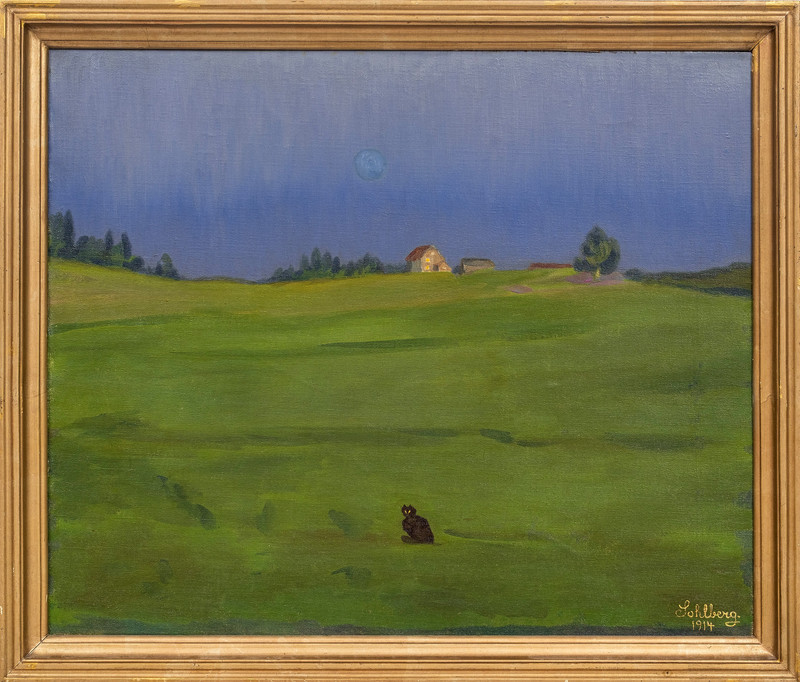
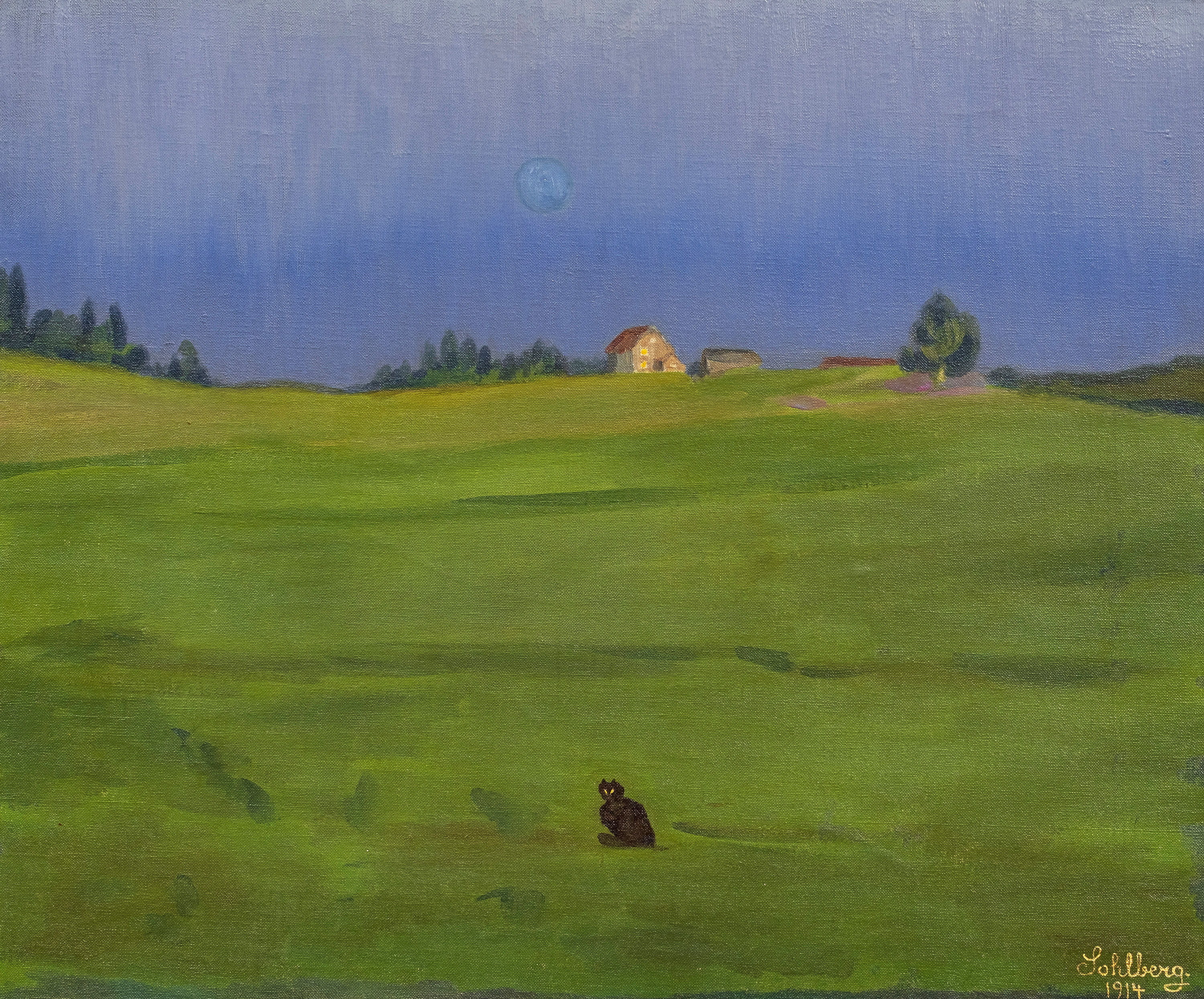
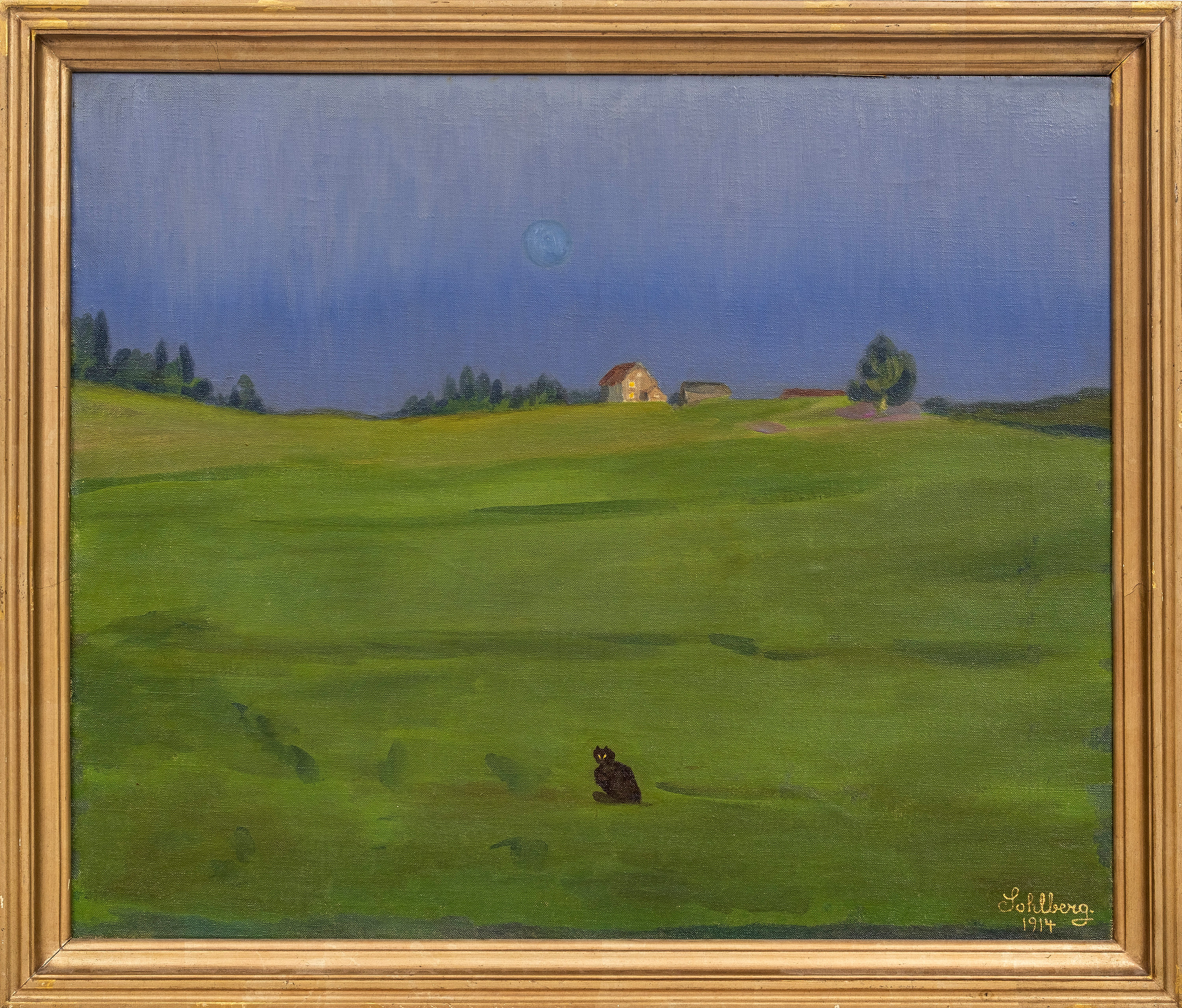
In From Hogstvet in Ås, 1914, Sohlberg depicts precisely this cultivated landscape. Here, nature has been cleared and ordered according to human needs. The expansive grassy field dominates the composition, while the relatively narrow band of sky lends the painting a distinctly modernist quality. The broad, horizontally arranged fields of colour evoke Japanese woodblock prints, with clearly defined transitions between the various elements and a palette characteristic of Sohlberg’s work. The black cat draws the viewer into the scene, while the faintly visible moon contributes to the mysterious, almost magical atmosphere for which the artist is renowned. Like one of Sohlberg’s major works, Winter Night in the Mountains (1914, National Museum, Oslo), From Hogstvet in Ås conveys a metaphysical force residing within even the most unassuming natural surroundings.